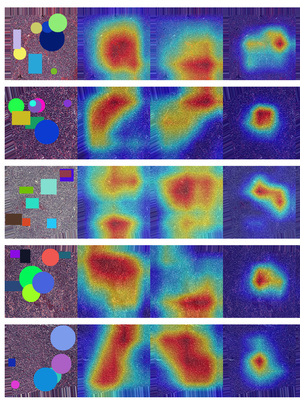
This work introduces LymphAware, a domain-aware bias disruption framework designed to improve the robustness and clinical reliability of lymphoma histopathology AI systems. Modern classifiers often rely on shortcut signals such as scanner-specific color distributions, staining variability, and slide-preparation artifacts, which artificially inflate in-domain accuracy but collapse under cross-acquisition domain shift. LymphAware explicitly disentangles disease-relevant morphological features from acquisition-sensitive nuisance factors through three complementary mechanisms, morphology-centric feature isolation, adversarial and orthogonality-based shortcut suppression, and cross-domain stability regularization. To further expose hidden shortcut dependencies, the framework incorporates artifact-shift perturbations that simulate realistic staining and scanner variability while enforcing counterfactual consistency during training. Extensive evaluation on a heterogeneous multi-source lymphoma benchmark demonstrates improved cross-domain generalization, stable behavior under hyperparameter variation, and attribution maps better aligned with pathology-relevant regions. While these explanations reflect associative alignment rather than formal causal inference, the findings underscore the necessity of representation-level shortcut disruption for building clinically trustworthy lymphoma diagnostic AI systems.